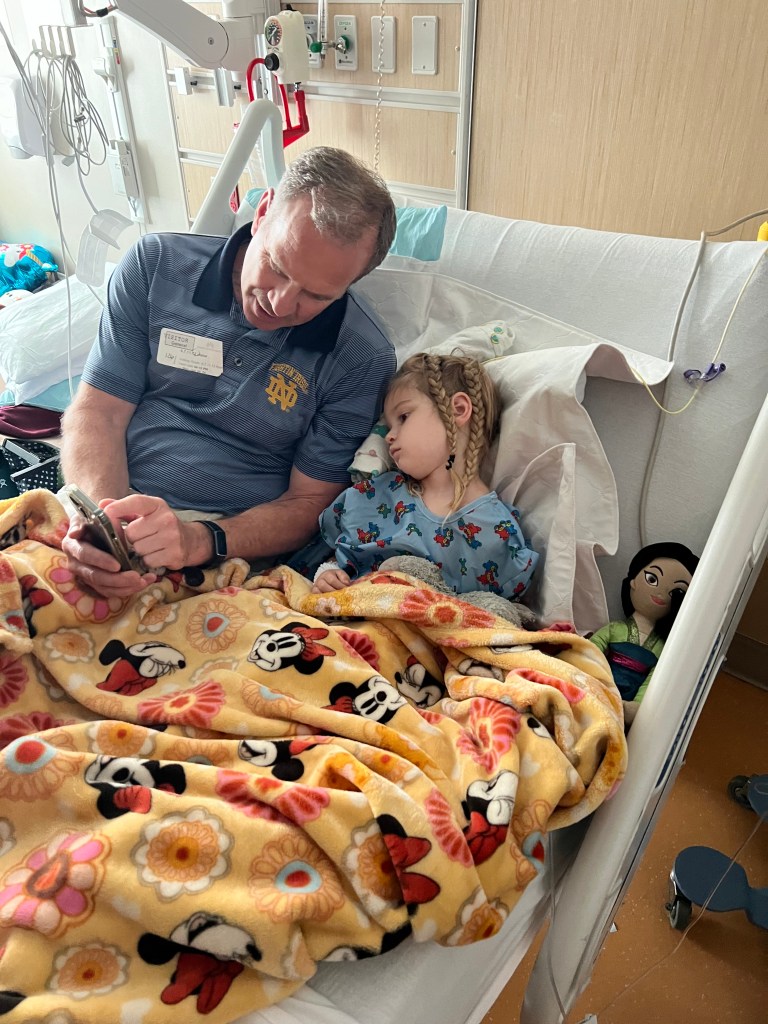
When a family’s life is turned upside down because of a medical diagnosis, it is hard to navigate. Not only for them but for those around them.
As a mom of a child who was diagnosed with a brain tumor, I was blessed with a few people who truly knew just what to do and what to say. Not because they’d been through anything like it, but I believe it was because the Holy Spirit guided them to act as the hands and feet of Jesus.
Of course, every family is different. Some families may want more space as they navigate hardship. Some families may pull away and need reminders of truth often through the loving support of those around them. Some families may need a lot of support but may feel unable to ask for it. The answer isn’t always clean cut but this is where prayer and discernment come in.
I’d like to share some things that were extremely helpful to my family as we trudged through the deepest, darkest valley of our lives so far. These are a few ways we experienced the love of Jesus here on earth.
1. Start with the practical.
Think of their current situation. Are they home caring for their sick family member? Are they staying at the hospital unable to cook meals for themselves? Are they leaving kids with another family member? Take all of this into consideration to anticipate their needs.
1 John 3:18 (ESV)
“Little children, let us not love in word or talk but in deed and in truth.”
DoorDash and Instacart gift cards were a lifesaver for me and my husband. We stayed at the hospital with our daughter and needed some enjoyable food to raise spirits. It sounds so small but we had so much money gifted to us in this way which provided nutrition and enjoyment to our lives in the hospital.
While my mother-in-law and my brother’s family took care of my other kids, someone started a meal train for them as well. I would have never thought about supporting the people who are directly supporting us. This is a whole other level of thoughtfulness. It lightens the load of our family who added 2 kids 2 and under to their responsibilities which, in turn, helped put our hearts at ease. Knowing they were being helped and cared for as well.
Isaiah 58:10 (ESV)
“If you pour yourself out for the hungry and satisfy the desire of the afflicted, then shall your light rise in the darkness…”
2. Be consistent.
Set an alarm to ask them how they are doing, send an encouraging text, or to pray for them.
This one seems very simple but means so much. There were some people who consistently checked in on us. They asked us detailed questions on my daughter’s condition, how we were feeling, and sent scripture to us. It may not have been everyday, but it was enough to where I knew they cared and were invested.
This one could also seem like overkill. And depending on the family you are supporting, this could be too much. Which leads into my next point..
3. Simply ask them what would be helpful.
Do they want to receive texts, calls or visits? Do they need anything done at the house? Meals provided? This is one of the most helpful things you can do. It’s not about you and making yourself feel helpful.. but rather what actually IS helpful.
My friend texted me shortly after my daughter’s surgery and simply said, “I struggle knowing whether or not to text you during this time..” and that made it clear to me that I need to be straight up and tell people what I need. My thoughts were ‘YES please text me. Please don’t stop.. I may not always respond but I am not annoyed.’ It’s just hard to communicate this openly. This also may not be everyone’s response. But it helps to just ask, “What do you need? Do you want me to text you? I don’t need a response but rather want you to know we are here and we care.”
Galatians 6:2 (ESV)
“Bear one another’s burdens, and so fulfill the law of Christ.”
4. Show up.
Depending on your closeness with the family, visit them.
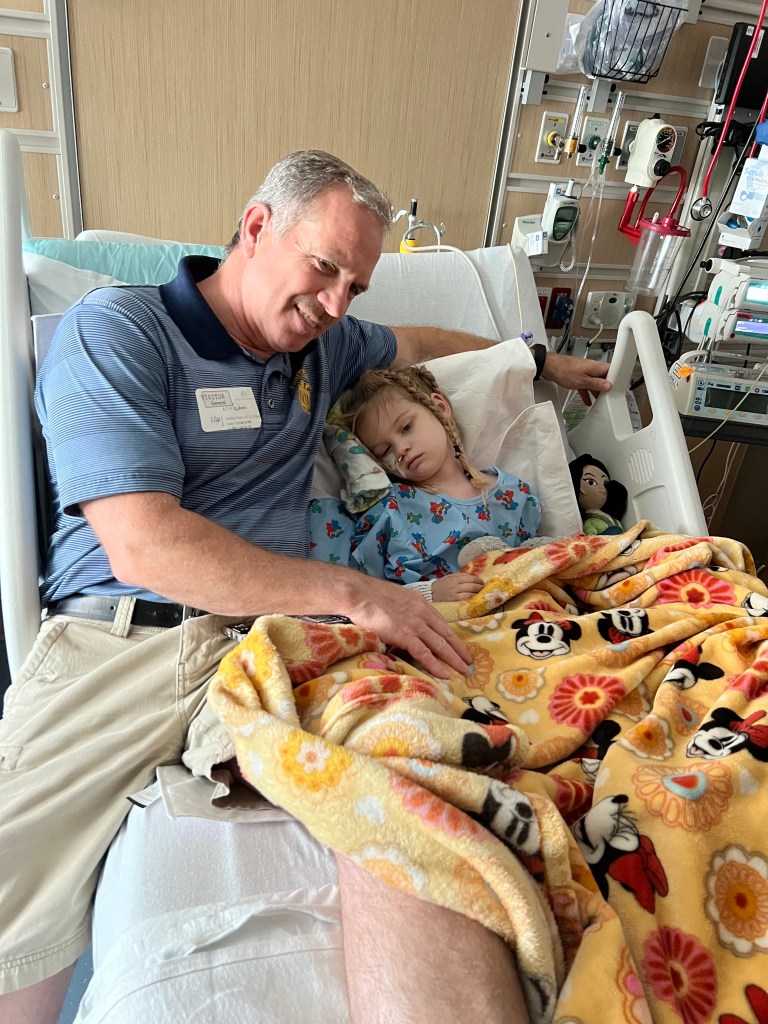
Ask if you can be in the waiting room during surgeries or treatments. Ask if you can come over and pray with them or drop off an encouraging card. If you aren’t very close but still want to support them, drop stuff off at their doorstep.
Our small group would gather at parks and pray for our family without us even there. You can show up in many different ways.
Ecclesiastes 4:9–10 (ESV)
“Two are better than one… For if they fall, one will lift up his fellow.”
Of course, ask first. With all of these suggestions, you absolutely need to be thoughtful of what the family wants and needs. Is it a good time for them? Are they needing to isolate due to germs before a surgery? Does the sick person need rest? Make sure to take all of this into consideration when “showing up.”
5. The most important thing is to LISTEN and PRAY.
Let’s be honest. Most of us have no idea what to say in these situations. We all want to be of use. We want to tell them “everything will be okay” even though we don’t actually know that.. but filling the gaps with empty talk can be a bit hurtful.
A lot of the time, they will share what they want to share and talk about what they want to talk about. Ask them questions. Dig deeper. Ask them, genuinely, how they are doing.. how they are feeling? How can you pray for them?
Prayer. The most useful tool that brings peace, clarification, and a closeness to God that is powerful and tangible. Pray for them. Pray with them. Pray over them. God hears our cries.
Philippians 4:6–7 (ESV)
“Do not be anxious about anything, but in everything by prayer and supplication with thanksgiving let your requests be made known to God.”
Another key is to not hold back tears. This may be controversial. But when I saw other people crying and lamenting with us, it made me feel like they were in this with us. There’s a difference between being emotionally hysterical and being rightfully empathetic.
Romans 12:15 (ESV)
“Rejoice with those who rejoice, weep with those who weep.”
The Bible tells us to share in other’s suffering.. not to stay arm’s length away and only do “so much.” But to share in suffering.. share in the pain but also be a pillar of truth and strength for them to come to and lean on.
There is good positioning for those of you who feel the pain of these families but also know the truth of Scripture and are able to encourage them with it.
2 Corinthians 1:3–4 (ESV)
“Blessed be the God and Father of our Lord Jesus Christ, the Father of mercies and God of all comfort, who comforts us in all our affliction, so that we may be able to comfort those who are in any affliction…”
The most important thing to note with all of these suggestions: consistency. The support people can escape the sadness, anxiety, and worry when they inevitably go back to work, school, and their necessary daily responsibilities. The families enduring the suffering cannot escape the devastation. It is helpful to have consistent support whether it be a small message of encouragement, prayer, or visits here and there.. it shows them you are in this with them.. sharing in their suffering and being the hands and feet of Jesus.

